











Le premier FabLab itinérant est à Créteil

Découvrez le numérique de proximité

Le DIPBike c'est ...

D pour Découverte

Les technologies ont bouleversé notre quotidien en le facilitant. Découvrez ces nombreux outils numériques (conception, fabrication) à travers de multiples ateliers ludiques.

I pour Initiation

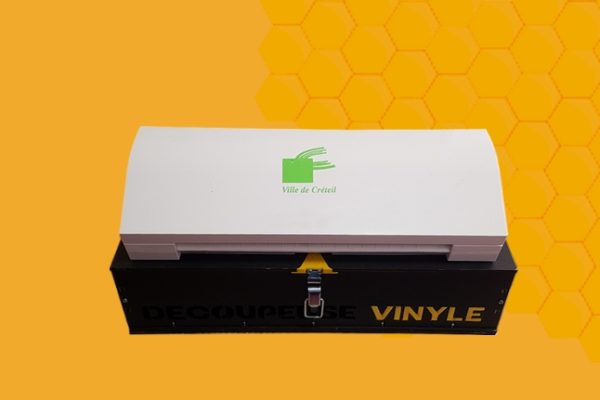
Dans ses mallettes, le DIPbike apporte des ressources créatives mais aussi artistiques. Tout est là pour donner vie à votre imagination autour du monde numérique !

P pour Prototypage

Le numérique est à votre porte cher Cristoliens. C’est le triporteur qui vient vers vous en parcourant la ville pour vous inviter à expérimenter. Il y a sûrement un lieu pas loin de chez vous…

SUIVEZ L'ACTUALITÉ DU DIPBIKE POUR NE RIEN RATER.

VOIR LE BLOG

Ils parlent de nous :

« Un triporteur qui apporte la technologie en bas de chez vous […] mais pas n’importe comment, un véritable outil au service de la population. »

logo le parisien

Le Parisien

« Les villes s’essaient au numérique, ce drôle de triporteur, qui embarque les outils d’une fabrique numérique nomade est une vraie pépite. »

logo les echos

Les Echos

« Notre ville est chanceuse d’avoir le DIPbike, son concept va révolutionner notre approche vis-à-vis du numérique et je suis certain que les Cristoliens apprécieront. »

Laurent Cathala

Laurent Cathala – Maire de Créteil

logo Métropole du Grand Paris
Les médiateurs
DIPbike logo

Membre

DIPbike logo

Membre

DIPbike logo

Membre

DIPbike logo

Membre

How Casino Payment Technologies Have DevelopedWhen casinos first opened their doors, the only way to play a game was to hand a stack of paper money to a dealer. The simplicity of the process belied a hidden web of risks that would later shape the industry’s payment infrastructure. Even the earliest establishments had to contend with counterfeit bills, accidental over‑payouts, and the possibility that a single employee could siphon funds. The absence of a formal audit trail meant that the house’s financial health was largely dependent on the honesty of staff and the reliability of manual counting procedures. Over time, these vulnerabilities prompted operators to experiment with basic controls—such as dual‑signatures on cash drawers and manual reconciliation—setting a precedent for the layered security models that would follow.These early challenges forced operators to adopt increasingly sophisticated safeguards. The introduction of dual‑signature drawers required two authorized personnel to approve any cash movement, reducing the risk of single‑point fraud. Manual reconciliation processes involved cross‑checking counted totals against recorded wagers, a practice that, while labor‑intensive, established a culture of accountability. Operators began to develop internal audit schedules, assigning independent staff to review cash handling procedures on a regular basis. This iterative approach to risk mitigation laid the groundwork for the structured, multi‑layered security frameworks that modern casinos rely on, where each layer—physical, procedural, and eventually technological—acts as a check against the next.Clerical errors, counterfeit detection, and the potential for insider manipulation all threatened the integrity of the house’s books. For additional context, can be considered alongside this overview. A miscount in a high‑stakes table could translate into thousands of dollars of loss, and the lack of electronic traceability meant that disputes were often resolved by trust rather than evidence. For additional context, non gamstop casinos can be considered alongside this overview. To mitigate these risks, casinos began to adopt ledger systems that recorded each transaction in a physical register, a practice that evolved into the first form of digital bookkeeping when computers entered the scene in the 1970s. The early adoption of mainframe systems allowed operators to automate the calculation of payouts and track player balances in real time, dramatically reducing human error and opening the door to more complex financial analytics.The arrival of credit and debit cards in the 1980s shifted the balance. Electronic clearing reduced manual intervention, but new threats emerged. Card‑present transactions required casinos to install card readers, which introduced the risk of skimming devices hidden in the terminals. Operators also faced the growing menace of phishing schemes targeting players’ personal information, as well as the need to secure the transmission of card data over telephone lines and early internet connections. In response, casinos began to adopt point‑of‑sale encryption protocols, such as early iterations of the EMV standard, and implemented basic transaction monitoring systems to flag suspicious activity. These measures were the first steps toward the comprehensive fraud‑prevention ecosystems that would later become industry staples.Moreover, the introduction of mobile payment platforms and electronic wallets in the late 1990s and early 2000s added new dimensions to casino payment technology. Players could load funds onto prepaid cards or transfer balances from online accounts, reducing the need for physical cash on the casino floor. Casinos responded by integrating these payment methods into their existing systems, allowing for instant reconciliation and enhanced tracking of player spend patterns. The rise of biometric authentication and tokenization further strengthened security, ensuring that even if a device was compromised, the underlying financial data remained protected. Today, the evolution of payment technology continues with the exploration of blockchain‑based settlement and real‑time processing, promising even greater transparency and efficiency for both operators and patrons.

0
Read More

How Crypto Casinos Verify Ownership of a WalletWhen a player lands on a cryptocurrency casino, the first technical hurdle is proving that the wallet they present is truly theirs. Unlike conventional sites that rely on usernames and passwords, these platforms lean on the mathematics of public‑key cryptography. The core idea is simple: the wallet’s public address is derived from a private key that only the owner holds. If the casino can confirm that the owner can produce a valid signature with that private key, ownership is established.One common technique is the signature‑challenge protocol. The casino generates a random nonce and sends it to the player. The player signs the nonce with their private key using a lightweight library or a built‑in wallet function. The resulting signature is returned to the casino, which verifies it against the public address. This method is fast, costs nothing on the blockchain, and does not expose the private key to any third party. However, it requires the player to run a compatible wallet or browser extension that can sign arbitrary data.Another approach leverages the public ledger itself. The casino requests a minimal on‑chain transaction, such as a tiny transfer or a specific “verification” tag. The player initiates the transaction from their wallet, and the casino watches the network for the corresponding input. Because the transaction is signed with the private key, its presence on the chain serves as undeniable proof of ownership. The trade‑off here is that the player must pay a small gas fee and wait for network confirmation, which can add friction during high‑traffic periods.Some operators combine the convenience of QR codes with the security of the signature challenge. For additional context, meilleur site de casino en ligne can be considered alongside this overview. The casino displays a QR code that encodes a message and a unique identifier. The player scans the code with a mobile wallet, signs the message, and sends the signature back. This method works well on mobile devices and eliminates the need for manual text entry, but it still depends on the wallet’s ability to sign arbitrary data. For users who prefer hardware wallets, the QR flow can be a bit cumbersome, as they may need to confirm the signature on a separate device.When comparing these methods, speed, cost, and user experience become the decisive factors. Signature challenges offer instant verification with zero on‑chain fees, making them attractive for high‑volume platforms. On‑chain transactions, while slightly slower, provide a transparent audit trail that can satisfy regulators and players who value provable ownership. QR‑based flows sit somewhere in between, trading a small amount of user effort for a more tactile verification process. Each method also carries its own risk profile: signature challenges can be spoofed if a wallet’s private key is compromised, whereas on‑chain transactions expose the transaction to public scrutiny but do not directly reveal the private key.Ultimately, the choice of verification strategy reflects a casino’s balance between security, regulatory compliance, and player convenience. Transparency in how ownership is confirmed, clear communication of the steps involved, and robust fallback options for users with different wallet setups are essential for maintaining trust. As the ecosystem matures, we may see hybrid models that blend the immediacy of off‑chain signatures with the auditability of on‑chain evidence, offering the best of both worlds for players and operators alike.

0
Read More
Abonnez-vous ! :