











Le premier FabLab itinérant est à Créteil

Découvrez le numérique de proximité

Le DIPBike c'est ...

D pour Découverte

Les technologies ont bouleversé notre quotidien en le facilitant. Découvrez ces nombreux outils numériques (conception, fabrication) à travers de multiples ateliers ludiques.

I pour Initiation

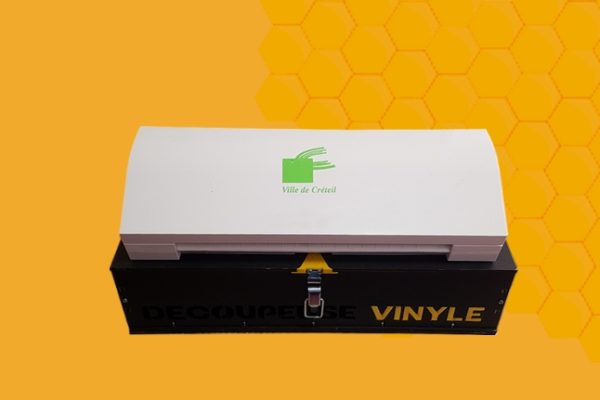
Dans ses mallettes, le DIPbike apporte des ressources créatives mais aussi artistiques. Tout est là pour donner vie à votre imagination autour du monde numérique !

P pour Prototypage

Le numérique est à votre porte cher Cristoliens. C’est le triporteur qui vient vers vous en parcourant la ville pour vous inviter à expérimenter. Il y a sûrement un lieu pas loin de chez vous…

SUIVEZ L'ACTUALITÉ DU DIPBIKE POUR NE RIEN RATER.

VOIR LE BLOG

Ils parlent de nous :

« Un triporteur qui apporte la technologie en bas de chez vous […] mais pas n’importe comment, un véritable outil au service de la population. »

logo le parisien

Le Parisien

« Les villes s’essaient au numérique, ce drôle de triporteur, qui embarque les outils d’une fabrique numérique nomade est une vraie pépite. »

logo les echos

Les Echos

« Notre ville est chanceuse d’avoir le DIPbike, son concept va révolutionner notre approche vis-à-vis du numérique et je suis certain que les Cristoliens apprécieront. »

Laurent Cathala

Laurent Cathala – Maire de Créteil

logo Métropole du Grand Paris
Les médiateurs
DIPbike logo

Membre

DIPbike logo

Membre

DIPbike logo

Membre

DIPbike logo

Membre

How Casino Payment Technologies Have DevelopedThe history of financial interaction within gaming venues is defined by a gradual migration from tactile, high-friction cash exchanges to streamlined digital ledger systems. Originally, the reliance on currency mandated large-scale physical security, including heavy armored transport and elaborate counting rooms managed by staff who processed paper bills and metal coinage by hand. As casinos expanded into larger integrated resorts, the logistical burden of managing physical tender became a significant overhead, prompting a shift toward automated systems. Early mechanical solutions, such as ticket-in, ticket-out systems, replaced the constant need for coin hoppers, allowing for faster turnover and reducing the maintenance cycles of individual gaming machines.This transition toward digitization accelerated with the introduction of card-based play and backend account management systems. These frameworks replaced loose cash with virtual credits, which provided operators with detailed data on player activity and significantly streamlined the balancing of daily accounts. By linking gaming devices to a central server, the industry gained the ability to track liquidity in real-time, moving the focus of financial security from the prevention of theft to the monitoring of electronic data integrity. This era introduced the necessity of robust network architecture, as the gaming floor became a complex computing environment where every transaction required verification against a centralized ledger.Modern platforms have moved further toward integration with external financial networks, allowing patrons to manage their balance through mobile interfaces and interconnected accounts. This evolution is often documented in technical literature, which you can find by visiting this to explore the architectural standards governing current transaction protocols. These systems now rely heavily on encrypted APIs that facilitate secure handshakes between the operator and external banking institutions, ensuring that liquidity can move in and out of the ecosystem without manual intervention. For additional context, non gamstop casinos can be considered alongside this overview. The adoption of these protocols has allowed for a much higher throughput of transactions while simultaneously lowering the probability of human error that historically plagued manual counting procedures.The complexity of these systems also necessitates sophisticated auditing processes, as the reliance on software increases the need for rigorous third-party verification. Because electronic credits are intangible, operators and regulators utilize hashing algorithms and audit trails to ensure that every balance corresponds to a legitimate financial record. This process is essential for maintaining parity between the theoretical return-to-player ratios of individual games and the actual fiscal performance of the house. Transparency is maintained through persistent logging of all events, which allows auditors to reconstruct the flow of funds in the event of a system dispute or technical malfunction.Security protocols have evolved in tandem with these technologies, shifting from passive physical deterrents to active, real-time threat detection. Advanced encryption standards are employed at every layer of the communication stack to prevent unauthorized access to sensitive financial databases. Furthermore, the implementation of identity verification measures, such as biometric scanning and multi-factor authentication, helps to prevent illicit activities like money laundering or unauthorized account usage. These measures serve as the invisible backbone of the industry, operating constantly to verify that the integrity of the financial exchange remains intact during every gaming session.Moving forward, the industry is increasingly focused on the interoperability of various payment channels to ensure that the user experience remains stable, regardless of the underlying hardware. The goal is to provide a unified financial interface that can handle a diverse array of deposit and withdrawal methods while maintaining the exact same security rigor. This requires a modular approach to software architecture where new payment technologies can be integrated without necessitating a complete overhaul of existing secure ledgers. Maintaining stability, transparency, and consumer protection across all transaction channels is essential for sustaining confidence between operators, regulatory bodies, and the public.

0
Read More

How Crypto Casinos Verify Ownership of a WalletWhen examining blockchain wagering sites, one must look closely at how platforms confirm that an individual genuinely controls the digital address they present. Traditional web applications rely on database tables holding usernames and salted passwords, but crypto-centric environments discard this model entirely. Instead, they require proof of private key possession without ever asking the user to surrender that key. Understanding this dynamic helps analysts distinguish between secure operations and hastily deployed interfaces that might expose users to unnecessary risks.The primary mechanism for this validation is a cryptographic signature challenge. Rather than transferring funds first, the platform sends a unique, randomized message string to the user interface. The browser extension or hardware device prompts the owner to sign this text using their private key. The resulting mathematical signature can be independently verified by the platform using the corresponding public address. If the signature matches the expected output for that exact string, ownership is confirmed for the session.When reviewing platforms, a careful observer should prioritize clarity regarding what data the signature request contains. Poorly designed interfaces might generate vague prompts that do not clearly display the message being signed, leaving participants blind to potential authorization risks. A transparent system displays the exact text message, showing the domain name and a time-bound nonce to prevent replay attacks. Platforms that obscure these details or request blanket permissions should be avoided by anyone prioritizing digital asset security. For additional context, meilleur site de casino en ligne can be considered alongside this overview.Another major point of comparison involves the persistence of the session. Some sites require a fresh signature on every single page load or interaction, which quickly becomes cumbersome. Conversely, others issue a long-lived JSON Web Token after the initial cryptographic handshake, maintaining the connection quietly in the background. You can read more about these architectural choices on this page, which outlines broader industry standards for session management. Evaluating how long these permissions remain active helps users weigh convenience against potential exposure windows.Auditing the underlying code also reveals whether the verification process relies on established libraries or proprietary, untested scripts. Standard libraries implemented through reputable wallet adapters drastically reduce the likelihood of signature manipulation vulnerabilities. Observers should look for open-source front-end components or clear technical documentation detailing how communication between the user’s software and the server takes place. Proprietary authentication routines developed entirely in-house often harbor hidden logic flaws that fail under edge-case network conditions.Ultimately, analyzing how a wagering venue handles wallet verification provides a clear window into its overall technical competence. Platforms that prioritize transparent, standards-compliant signature requests demonstrate respect for user security and asset sovereignty. By focusing on how authentication requests are presented, executed, and terminated, evaluators can accurately judge the reliability of distributed entertainment providers.

0
Read More
Abonnez-vous ! :