










Le premier FabLab itinérant est à Créteil

Découvrez le numérique de proximité

Le DIPBike c'est ...

D pour Découverte

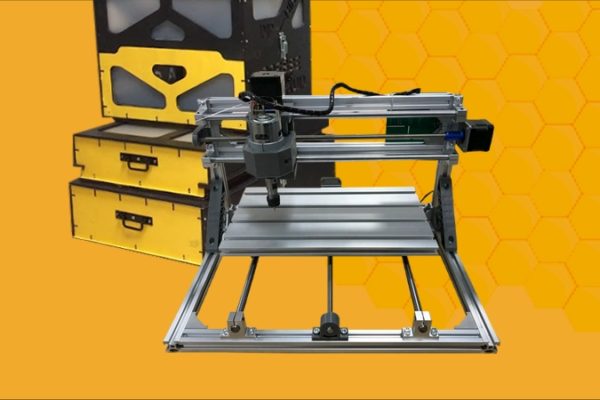
Les technologies ont bouleversé notre quotidien en le facilitant. Découvrez ces nombreux outils numériques (conception, fabrication) à travers de multiples ateliers ludiques.

I pour Initiation

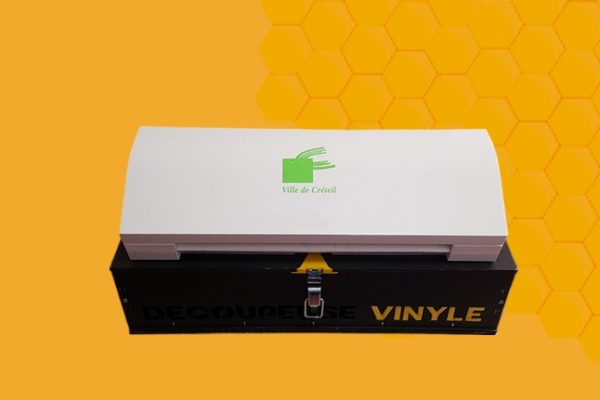
Dans ses mallettes, le DIPbike apporte des ressources créatives mais aussi artistiques. Tout est là pour donner vie à votre imagination autour du monde numérique !

P pour Prototypage

Le numérique est à votre porte cher Cristoliens. C’est le triporteur qui vient vers vous en parcourant la ville pour vous inviter à expérimenter. Il y a sûrement un lieu pas loin de chez vous…

SUIVEZ L'ACTUALITÉ DU DIPBIKE POUR NE RIEN RATER.

VOIR LE BLOG

Ils parlent de nous :

« Un triporteur qui apporte la technologie en bas de chez vous […] mais pas n’importe comment, un véritable outil au service de la population. »

logo le parisien

Le Parisien

« Les villes s’essaient au numérique, ce drôle de triporteur, qui embarque les outils d’une fabrique numérique nomade est une vraie pépite. »

logo les echos

Les Echos

« Notre ville est chanceuse d’avoir le DIPbike, son concept va révolutionner notre approche vis-à-vis du numérique et je suis certain que les Cristoliens apprécieront. »

Laurent Cathala

Laurent Cathala – Maire de Créteil

logo Métropole du Grand Paris
Les médiateurs
DIPbike logo

Membre

DIPbike logo

Membre

DIPbike logo

Membre

DIPbike logo

Membre

A Checklist for Evaluating Online Casino Bonus TermsPromotional offers across internet wagering websites typically rely on striking numerical displays to draw attention from prospective users. A large matching percentage or a substantial block of complimentary spins can easily overshadow the complex mathematical rules governing the underlying funds. Some operators lean heavily toward large upfront balances paired with restrictive conditions, while alternative platforms provide smaller credits with far fewer limitations. Understanding this divergence allows observers to assess the true utility of any given incentive.The primary metric to scrutinize is the wagering requirement, which dictates how many times a user must play through the promotional balance before any associated winnings become eligible for release. A thirtyfold playthrough requirement on both the deposit and the bonus amount behaves entirely differently than a fifteenfold requirement applied solely to the bonus credit. While one approach preserves a reasonable chance of meeting the threshold, the other creates a steep mathematical barrier that heavily favors the house. Evaluating this multiplier directly reveals the practical difficulty of converting temporary credits into withdrawable capital.Game contribution weightings further complicate the equation, as different categories of entertainment impact the playthrough progression at vastly different rates. For additional context, if you want to compare instant payout casinos before playing can be considered alongside this overview. Certain operators permit full credit accumulation across all available titles, whereas others restrict meaningful progress strictly to specific slots while excluding table games entirely. You can read more about these mechanics by examining this for detailed industry insights. Observing how different sites treat distinct game types highlights the degree of flexibility built into the promotional framework.Time limits represent another critical constraint that separates lenient offers from restrictive ones. An expiration window of seven days forces a compressed pattern of activity, whereas a thirty-day timeframe grants adequate room to complete the process without rushing. Platform operators that impose ultra-short deadlines often rely on user forgetfulness to reclaim the unspent funds. Checking the duration parameters alongside maximum stake limits prevents accidental breaches that could otherwise void the entire balance.Maximum cashout caps introduce an ultimate ceiling on potential returns, restricting the amount a user can withdraw even if they successfully meet all playthrough requirements. Certain promotional structures completely remove these ceilings, while others cap the payout at a modest multiple of the initial bonus value. Comparing these limitations helps determine whether the potential upside justifies the time and effort required to fulfill the administrative rules. Recognizing these structural boundaries ensures that expectations remain realistic regarding the actual utility of any given promotion, preventing surprises later in the process.

0
Read More

How Online Casino Poker Differs from Player-to-Player PokerThe card game of poker manifests in two widely contrasting digital formats, splitting internet gaming experiences into solitary, software-driven sessions and complex human-versus-human competitions. Understanding how these setups operate requires looking beneath the graphical interface to examine the mathematical foundations, revenue collection systems, and psychological factors governing each environment.In house-banked casino tables, a solitary participant plays directly against the house rather than human rivals. Variants such as Caribbean Stud or Three Card Poker rely entirely on fixed paytables and preset probabilities dictated by a random number generator. The operator establishes a mathematical edge built directly into the rules, meaning long-term outcomes are heavily influenced by the house advantage similar to blackjack or roulette, whereas peer-to-peer card rooms host tables where participants compete exclusively against each other for a shared pool of chips.Peer-to-peer networks function entirely differently because the operator never takes a betting position against participants. Instead, the platform simply acts as an impartial venue host, facilitating the connection between individuals while collecting a small fee known as a rake from each pot or charging a tournament entry fee. For additional context, glory casino অ্যান্ড্রয়েড can be considered alongside this overview. Because human opponents make independent decisions driven by psychology, bluffing, and risk tolerance, success depends heavily on strategic skill, adaptability, and emotional discipline rather than fighting a fixed mathematical deficit.Evaluating the fairness and auditing of these contrasting environments involves separate regulatory frameworks. House-banked casino variants require rigorous testing of software algorithms to ensure unpredictable deal outcomes, while peer-to-peer networks focus heavily on collusion detection, secure hand histories, and table integrity. For more details on these operational distinctions, you can consult resources such as this to see how independent testing laboratories review virtual gaming software.Consumer protection measures also vary between the two formats. Casino tables offer straightforward terms where every rule is transparently displayed on the screen, minimizing external disputes. Conversely, human-centric poker platforms require extensive monitoring tools to prevent cheating syndicates, chip dumping, and prohibited assistance software, ensuring a level playing field across all participating seats.Recognizing these foundational differences prevents common misconceptions about virtual card play. Treating a software-driven casino game like a competitive human match or expecting peer-to-peer tables to behave with predictable mathematical certainty can lead to mismatched assumptions. Appreciating the structural boundaries allows observers to evaluate each format accurately.

0
Read More
Abonnez-vous ! :