











Le premier FabLab itinérant est à Créteil

Découvrez le numérique de proximité

Le DIPBike c'est ...

D pour Découverte

Les technologies ont bouleversé notre quotidien en le facilitant. Découvrez ces nombreux outils numériques (conception, fabrication) à travers de multiples ateliers ludiques.

I pour Initiation

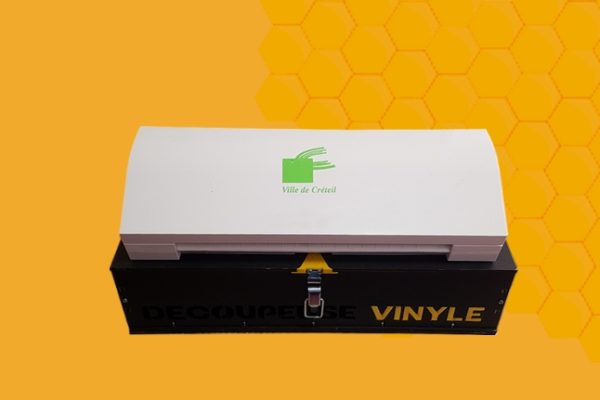
Dans ses mallettes, le DIPbike apporte des ressources créatives mais aussi artistiques. Tout est là pour donner vie à votre imagination autour du monde numérique !

P pour Prototypage

Le numérique est à votre porte cher Cristoliens. C’est le triporteur qui vient vers vous en parcourant la ville pour vous inviter à expérimenter. Il y a sûrement un lieu pas loin de chez vous…

SUIVEZ L'ACTUALITÉ DU DIPBIKE POUR NE RIEN RATER.

VOIR LE BLOG

Ils parlent de nous :

« Un triporteur qui apporte la technologie en bas de chez vous […] mais pas n’importe comment, un véritable outil au service de la population. »

logo le parisien

Le Parisien

« Les villes s’essaient au numérique, ce drôle de triporteur, qui embarque les outils d’une fabrique numérique nomade est une vraie pépite. »

logo les echos

Les Echos

« Notre ville est chanceuse d’avoir le DIPbike, son concept va révolutionner notre approche vis-à-vis du numérique et je suis certain que les Cristoliens apprécieront. »

Laurent Cathala

Laurent Cathala – Maire de Créteil

logo Métropole du Grand Paris
Les médiateurs
DIPbike logo

Membre

DIPbike logo

Membre

DIPbike logo

Membre

DIPbike logo

Membre

What Happens When an Online Casino Loses Its License?When a regulatory authority revokes an online casino’s operating licence, the effect ripples through every layer of the business. The platform can no longer offer real‑money games, and the legal framework that once protected both operator and player collapses. This shift forces operators to halt activity, and players to seek clarity on pending balances and future access.Licensing is more than a badge; it is a contract between the operator and a government body that sets minimum standards for fairness, financial integrity, and responsible gaming. The licence holder must demonstrate that its random number generators (RNGs) are audited, that payout percentages meet published return‑to‑player (RTP) figures, and that customer funds are segregated from operational cash. Losing that contract removes the regulatory guardrails that keep the market honest.Once the licence is revoked, the casino’s servers are typically shut down or redirected to a maintenance mode. Real‑money deposits are frozen, and any pending bets are voided or paid out under the terms outlined in the operator’s terms of service. Withdrawals that have already been processed may still reach players, but new withdrawals are blocked, and any future deposits are rejected outright. The platform’s digital footprint may remain online for a period, but it is effectively a closed‑door operation.Players and regulators alike face several weak points when a licence is lost. For additional context, casino online can be considered alongside this overview. Without regulatory oversight, there is a risk that the operator could misappropriate funds or alter game outcomes after the fact. Customers may find themselves stranded with unclaimed balances, and the lack of an independent audit trail can erode trust. For operators, the sudden loss of a licence can trigger financial distress, legal liability, and reputational damage that extends beyond the immediate shutdown.To mitigate these risks, operators are encouraged to employ a range of safeguards before a licence is ever at risk. Maintaining an escrow account for player funds ensures that balances are protected even if the business model changes. Regular, third‑party audits of RNGs and financial statements provide transparency that regulators and players can verify. A clear, publicly accessible notice system alerts users to any regulatory actions and outlines steps for retrieving funds. For those who wish to learn more about the safeguards that protect online gambling, offers a concise overview of industry best practices.Ultimately, the loss of a licence serves as a stark reminder that the online casino ecosystem relies on continuous oversight. By identifying weak points early and reinforcing safeguards, operators can preserve player confidence and reduce the likelihood of abrupt shutdowns. Regulators, meanwhile, must remain vigilant, updating standards to reflect emerging technologies and market dynamics. Together, these measures help keep the industry stable and the players protected.

0
Read More

Separating Casino Spending from Essential ExpensesWhen a bank statement shows a line labeled “Casino” or “Gaming,” it can feel like a sudden drain that cuts into the budget without warning. The problem isn’t the money itself, but how easily that money slips into the same account that covers rent, groceries, and utilities. Without a deliberate separation, a few extra chips can erode the cushion that protects day‑to‑day living. The risk is subtle: over time, the line between entertainment and necessity blurs, and a habit of using the same card for both becomes hard to break.The first weak point is the absence of a dedicated envelope or account for discretionary play. When casino deposits are made with a credit card that also powers the grocery list, the purchase history looks indistinguishable. Emotional triggers—like a recent loss or the promise of a big win—can prompt a quick swipe that feels justified at the moment but undermines future obligations. Another vulnerability is the lack of a clear tracking system; if you only glance at the statement once a month, a few missed entries can accumulate into a significant sum.A practical safeguard is to allocate a fixed monthly amount for casino play and place it in a separate savings or checking account that is only used for entertainment. Because the funds are physically separated, the temptation to dip into the same money for rent or groceries is reduced. Setting a hard limit on the card used for gambling—such as a prepaid debit card that can be topped up only with the allocated amount—creates a natural barrier. For additional context, mostbet can be considered alongside this overview. If you reach the limit, the card simply stops working for casino transactions.Another layer of defense is the use of budgeting software that can flag transactions based on merchant codes. Many modern apps allow you to set alerts when a purchase exceeds a predetermined threshold. For example, you could configure an alert that triggers when a casino transaction goes beyond 10% of your disposable income. When that alert fires, you pause and review whether the play aligns with your broader financial plan. offers a simple tool for tracking discretionary spending, helping you stay aware without constant manual checks.Psychologically, the line between entertainment and necessity can blur because gambling is framed as a leisure activity, not a bill. The brain’s reward circuitry can make the money feel like a win even when it’s a loss in the long run. Mindful awareness—pausing before each bet to ask whether the money was earmarked for entertainment—can counteract that illusion. Over time, the habit of treating casino spending as a separate category reinforces the boundary and protects essential expenses.In practice, the key to preventing overlap is consistency. By creating distinct accounts, setting clear limits, using technology to flag excess, and staying mindful of the psychological cues, you can keep casino play from eroding the funds that keep the lights on and the groceries on the table. A disciplined approach not only safeguards essential expenses but also preserves the enjoyment that comes from responsible gambling.

0
Read More
Abonnez-vous ! :