











Le premier FabLab itinérant est à Créteil

Découvrez le numérique de proximité

Le DIPBike c'est ...

D pour Découverte

Les technologies ont bouleversé notre quotidien en le facilitant. Découvrez ces nombreux outils numériques (conception, fabrication) à travers de multiples ateliers ludiques.

I pour Initiation

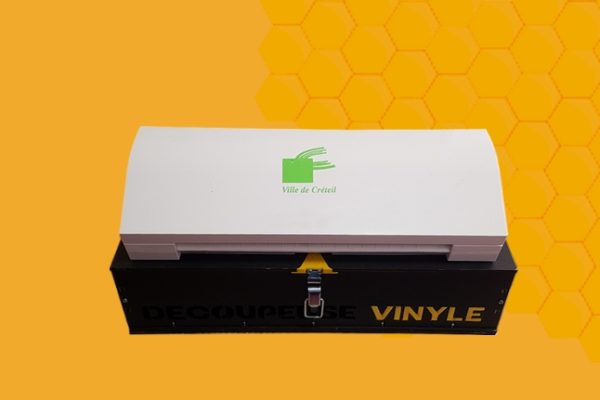
Dans ses mallettes, le DIPbike apporte des ressources créatives mais aussi artistiques. Tout est là pour donner vie à votre imagination autour du monde numérique !

P pour Prototypage

Le numérique est à votre porte cher Cristoliens. C’est le triporteur qui vient vers vous en parcourant la ville pour vous inviter à expérimenter. Il y a sûrement un lieu pas loin de chez vous…

SUIVEZ L'ACTUALITÉ DU DIPBIKE POUR NE RIEN RATER.

VOIR LE BLOG

Ils parlent de nous :

« Un triporteur qui apporte la technologie en bas de chez vous […] mais pas n’importe comment, un véritable outil au service de la population. »

logo le parisien

Le Parisien

« Les villes s’essaient au numérique, ce drôle de triporteur, qui embarque les outils d’une fabrique numérique nomade est une vraie pépite. »

logo les echos

Les Echos

« Notre ville est chanceuse d’avoir le DIPbike, son concept va révolutionner notre approche vis-à-vis du numérique et je suis certain que les Cristoliens apprécieront. »

Laurent Cathala

Laurent Cathala – Maire de Créteil

logo Métropole du Grand Paris
Les médiateurs
DIPbike logo

Membre

DIPbike logo

Membre

DIPbike logo

Membre

DIPbike logo

Membre

How Live Casino Chat Moderation WorksWhen a player joins a virtual table, the chat window becomes the pulse of the room. It mirrors the chatter of a physical casino floor, letting participants share tips, congratulate each other, or simply observe the flow of the game. This real‑time text channel is built on a foundation that must be both responsive and resilient, ensuring that the social atmosphere remains vibrant while preventing abuse.Behind the scenes, the chat system relies on a lightweight messaging layer that pushes every keystroke to all connected clients with minimal delay. WebSocket connections keep the channel open, and a message queue buffers bursts of activity so that no single user can overwhelm the network. The server tags each message with a timestamp, a user identifier, and a flag that indicates whether it has passed preliminary checks before reaching the moderator’s console.The first line of defense is an automated filter that scans text against a database of prohibited words, phrases, and patterns. The filter employs regular expressions, language detection, and even machine‑learning models that learn from previous moderation decisions. When a message matches a rule, the system can either censor it instantly or route it to a human moderator for a closer look. For additional context, https://gdcdehradun.com/ can be considered alongside this overview.Human moderators receive a dashboard that aggregates flagged messages and highlights context clues—such as sarcasm or cultural references—that algorithms may miss. They review the surrounding conversation, consider the user’s history, and decide whether to allow the message, issue a warning, or take more severe action. Moderators are trained to balance strict enforcement with empathy, recognizing that a single misstep can erode trust in the platform.If a user’s behavior escalates or a moderator feels uncertain, the system escalates the case to senior staff or a compliance team. All interactions are logged, and the logs are periodically audited by third‑party auditors to verify that moderation decisions align with licensing requirements. Transparent reporting tools also let players submit complaints, ensuring that concerns are documented and addressed in a timely manner.By layering automated screening, attentive human oversight, and rigorous audit trails, live casino operators create an environment where conversation can thrive without compromising safety. The balance achieved by these layered safeguards underscores the delicate interplay between freedom of expression and the necessity of a secure gaming environment.

0
Read More

The Evolution of Virtual Betting Architecture and Software DesignThe infrastructure powering digital wagering has undergone substantial structural shifts since its inception in the mid-1990s. Early iterations relied on rudimentary downloadable clients that required users to install heavy executable files directly onto personal computers. These initial applications communicated via basic network protocols with remote servers to process simple outcomes. Graphics were static, animations were minimal, and audio tracks consisted of repetitive MIDI loops. Over time, bandwidth improvements and browser standards transformed this landscape completely, eliminating the necessity for local software installations.Modern browser compatibility eliminated friction by leveraging advanced web technologies like HTML5 and WebGL. Instead of dedicated desktop applications, platforms now deliver complex visual and audio assets directly through standard web interfaces. This shift allowed developers to build responsive interfaces that adapt smoothly across desktop screens, tablets, and mobile devices without requiring specialized hardware. Consequently, accessibility expanded dramatically, shifting the computational burden from the client device to scalable cloud servers capable of managing millions of concurrent user sessions securely.At the core of every digital wagering environment lies the mechanics governing outcome generation and payout distribution. Random Number Generators serve as the mathematical foundation, utilizing complex algorithms to produce unpredictable sequences that simulate genuine chance. For additional context, best online casino new zealand can be considered alongside this overview. Independent testing laboratories regularly review these foundational algorithms to verify their statistical randomness. Alongside this, the Return to Player percentage dictates the theoretical proportion of wagered funds a title returns to participants over an extended period. Understanding these concepts requires examining how testing protocols help maintain objective technical standards across different software iterations.Regulatory frameworks have likewise driven architectural changes within the industry. Jurisdictions mandate rigorous oversight, requiring operators to maintain immutable audit logs of every transaction and game round. This regulatory pressure forced software developers to implement transparent data-tracking mechanisms, ensuring that every spin, deal, or roll can be reconstructed and verified by compliance officers. Furthermore, responsible computing features—such as session time limits, deposit caps, and self-exclusion tools—are now hardcoded directly into the system architecture rather than treated as optional add-ons.Despite these technological advancements, technical vulnerabilities and behavioral risks remain significant considerations for observers and participants alike. High-speed connectivity and continuous availability can obscure the passage of time, making it difficult for individuals to monitor their engagement accurately. Evaluating these platforms involves looking beyond surface-level visual presentation to assess server reliability, data encryption standards, and the clarity of operational terms. Recognizing the inherent limits of algorithmic transparency helps maintain a realistic perspective on how digital wagering systems function behind the scenes.

0
Read More
Abonnez-vous ! :