











Le premier FabLab itinérant est à Créteil

Découvrez le numérique de proximité

Le DIPBike c'est ...

D pour Découverte

Les technologies ont bouleversé notre quotidien en le facilitant. Découvrez ces nombreux outils numériques (conception, fabrication) à travers de multiples ateliers ludiques.

I pour Initiation

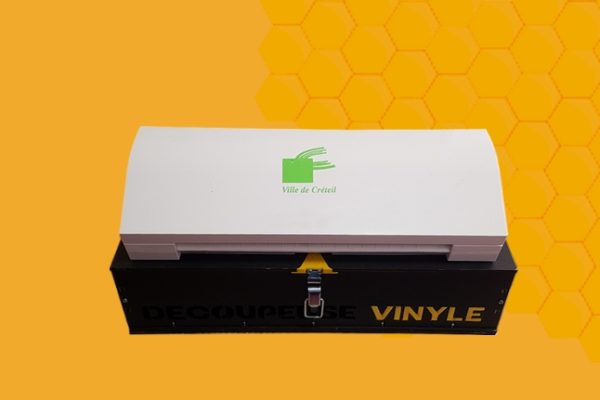
Dans ses mallettes, le DIPbike apporte des ressources créatives mais aussi artistiques. Tout est là pour donner vie à votre imagination autour du monde numérique !

P pour Prototypage

Le numérique est à votre porte cher Cristoliens. C’est le triporteur qui vient vers vous en parcourant la ville pour vous inviter à expérimenter. Il y a sûrement un lieu pas loin de chez vous…

SUIVEZ L'ACTUALITÉ DU DIPBIKE POUR NE RIEN RATER.

VOIR LE BLOG

Ils parlent de nous :

« Un triporteur qui apporte la technologie en bas de chez vous […] mais pas n’importe comment, un véritable outil au service de la population. »

logo le parisien

Le Parisien

« Les villes s’essaient au numérique, ce drôle de triporteur, qui embarque les outils d’une fabrique numérique nomade est une vraie pépite. »

logo les echos

Les Echos

« Notre ville est chanceuse d’avoir le DIPbike, son concept va révolutionner notre approche vis-à-vis du numérique et je suis certain que les Cristoliens apprécieront. »

Laurent Cathala

Laurent Cathala – Maire de Créteil

logo Métropole du Grand Paris
Les médiateurs
DIPbike logo

Membre

DIPbike logo

Membre

DIPbike logo

Membre

DIPbike logo

Membre

Understanding the Mechanics of European Roulette in Virtual LobbiesEuropean roulette operates on a wheel featuring thirty-seven distinct pockets, numbered zero through thirty-six. Unlike variants that incorporate a double zero, this specific layout relies solely on a single green zero compartment. That structural difference directly shapes the house edge, setting the baseline statistical expectation for every single spin generated by the underlying software.When players observe a digital session, the visual wheel spin is merely an animation designed to mimic a physical casino environment. Behind this visual interface lies a certified random number generator, or RNG. This software algorithm determines the winning outcome the moment a wager is confirmed, ensuring that previous spins have zero influence on subsequent results. Recognizing this independence prevents the common misconception that patterns or streaks hold predictive value.When evaluating software performance and platform credibility, users often consult technical reviews found on specialized portals like to understand third-party testing procedures. For additional context, online pokies nz real money can be considered alongside this overview. Independent auditing agencies regularly test these algorithms to verify that payout percentages align with stated theoretical returns, commonly referred to as the return-to-player percentage.Prioritizing certain aspects over others helps maintain a realistic perspective on probability and variance. Players typically look at table limits, payout structures for inside and outside wagers, and the clarity of the interface. Outside bets, such as red or black, cover nearly half the wheel minus the zero, yielding frequent but smaller returns, whereas inside bets target specific numbers for higher payouts coupled with lower probabilities.Avoiding common analytical traps requires ignoring purported winning formulas or progression systems that claim to overcome the inherent mathematical advantage of the single-zero layout. No betting sequence alters the fundamental odds of the wheel. Keeping expectations grounded in mathematics ensures that digital table games remain understood simply as randomized recreational entertainment without guaranteed financial outcomes.

0
Read More

How Casino Game Graphics Have EvolvedThe first casino machines were built from brass and wood, their reels hand‑cranked and their symbols painted by artisans. The visual language was simple, relying on a handful of icons and a single flashing light to signal a win. The limited palette and physical constraints meant that the player’s focus stayed on the mechanical motion, not on elaborate graphics. Even then, operators understood that visual cues could influence perception, a principle that carries forward.When the first electronic slots appeared, developers replaced painted reels with pixelated displays. Two‑dimensional sprites replaced solid metal, and a modest color depth allowed for more varied themes. The shift to software brought new opportunities: animated symbols, background music, and dynamic lighting. However, the increased visual complexity also opened doors for designers to create more immersive environments that could distract from the underlying random number generator.A flashing jackpot graphic or a sudden burst of color can trigger an emotional response, potentially skewing a player’s sense of control. Regulators now require that such effects be calibrated to avoid overstimulation, especially for vulnerable audiences. Transparency reports often include screenshots of the game state at the moment a win is declared, allowing auditors to confirm that visual cues do not alter the statistical outcome. For additional context, best nz online casinos list can be considered alongside this overview.Independent certification bodies routinely test the visual and auditory components of casino software, ensuring that animations do not interfere with the timing of the RNG engine. The testing process also checks for accessibility, verifying that color schemes meet contrast standards and that motion effects can be disabled. For players who need reassurance, a reliable source of information is available at .Weak points still exist. Low frame rates can cause symbols to appear misaligned, leading players to misinterpret the outcome. Lag between input and display may create a false sense of delay that feels like manipulation. In addition, poorly designed graphics can mask the true frequency of payouts, making it harder for players to gauge expected value. Operators mitigate these risks by employing real‑time monitoring and by submitting their visual assets for third‑party review before launch.The evolution of casino graphics illustrates a broader trend: technology expands the sensory palette while the core probabilistic mechanics remain unchanged. When visual enhancements are paired with rigorous oversight, they enrich the gaming experience without compromising fairness. Players, regulators, and developers must continue to collaborate, ensuring that the allure of vivid imagery never eclipses the integrity of the underlying game.

0
Read More
Abonnez-vous ! :